
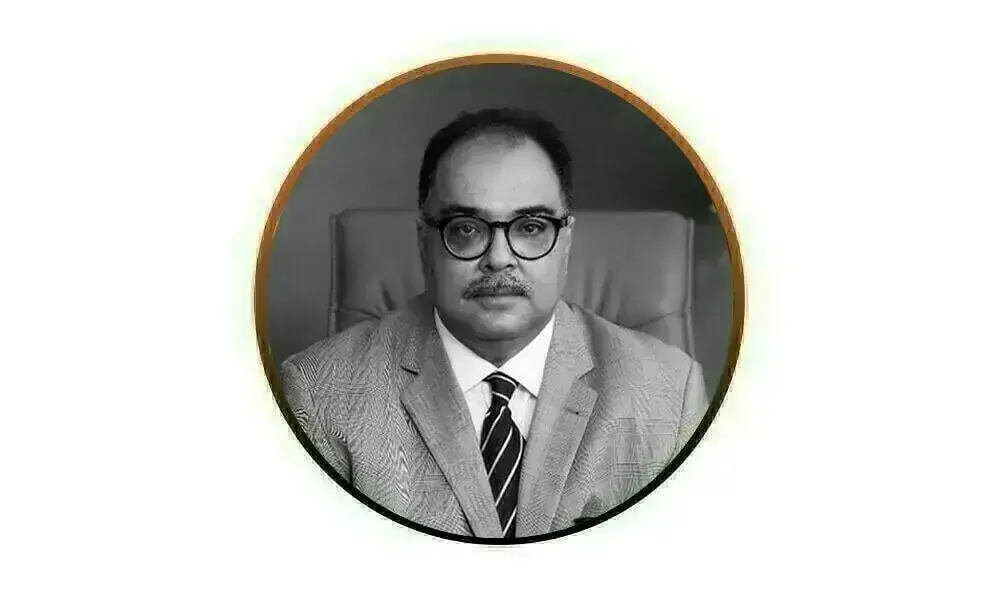
In his insightful and timely piece published in Business Recorder, Zafar Masud, the President and CEO of the Bank of Punjab, provides a roadmap for national resurgence titled “Pakistan’s economic opportunity in a fragmenting world.” Masud argues that while the global landscape is characterized by increasing volatility and decoupling, Pakistan stands at a crossroads where strategic agility could transform existential threats into a sustainable growth trajectory.
Pakistan’s Economic Opportunity
Authored by Zafar Masud | Published in Business Recorder on April 11, 2026
There are moments in history when events do not merely disrupt economies, they clarify them. The unfolding crisis in West Asia, like similar situations in the past, is one such moment. It is being interpreted, understandably, as a threat: to energy security, to inflation stability, to external balances, in the immediate future. But to stop at that interpretation is to miss its deeper significance, especially; keeping a broader and wider perspective in view.
This is not just a geopolitical crisis. It is a moment of economic revelation. It exposes, with unusual precision, the structural dependencies Pakistan has long carried and, more importantly, it illuminates the path to transcend them. For years, Pakistan, like many emerging economies, has operated within an implicit assumption that, global systems, though volatile, would remain broadly functional. Energy would flow. Trade routes would remain open. Capital would find its way.
That assumption no longer holds. The rerouting of global shipping adding 10–14 days and over 20 percent in logistics and insurance costs is not a temporary disruption; it is a signal that global trade architecture itself is becoming uncertain, and perhaps this elevated cost structure is there to stay, given the post-war reconstruction funding requirement in the form of additional taxes and charges. Similarly, the possibility of US $20–30 per barrel oil shocks is not simply a price risk, it is a reminder of structural dependence.
What this moment demands is not reaction but recognition. Pakistan’s vulnerabilities are not cyclical. They are systemic and systemic challenges require strategic responses.
Pakistan’s economic model has long been shaped by three external anchors: imported energy, remittance inflows, and external financing. Each of these now faces heightened uncertainty. But therein lies the opportunity. When constraints become visible, reform becomes possible.
Take energy, for example; with 80–85 percent dependence on imports and relatively limited strategic reserves in the context of fluidity of the crisis confronted, Pakistan has little room for complacency.
Yet, this very exposure creates urgency, urgency that can accelerate a transition towards economically viable indigenous sources, where exceedingly attractive FDI and climate finance is no longer aspirational, it is abundant. The question is no longer whether Pakistan should graduate. It is how fast it chooses to move. If oil rises toward US $80–90 per barrel, on an average for the year, inflation could return to 9–11 percent, reversing recently hard-earned economic stability and its potential gains.
Traditionally, this moment would have been viewed purely as a policy challenge. But circumstances, in moments like these, play another role: they create political space. Difficult reforms such as energy pricing, subsidy rationalization, fiscal discipline, broadening of tax-base, becomes more feasible when external realities make them unavoidable.
This swells the appetite for reforms at the grassroots level and drives the society, by default, towards a charter of sorts, which I always advocate as the “Charter of Society”.
Around the world, the most consequential economic transformations have not occurred in times of comfort, but in moments of constraint. Pakistan now faces such a moment. The choice is whether to use inflation defensively to contain it or strategically to restructure around it. Pakistan’s external sector has long been reactive, responding to shocks rather than shaping outcomes. Yet the current global reordering offers a rare opportunity to redesign it.
A potential US $1–1.5 billion current account pressure, under extreme stress scenarios, is not just a warning; it is a signal that the current model, i.e., import-led consumption financed by external inflows, is reaching its limits. The alternative is clear: build exports that are competitive, not just preferential; channel remittances into investment, not just consumption; attract capital that is patient, not just opportunistic. This is not about adjustment. It is about reorientation.
Economic sovereignty in the 21st century is no longer defined by borders. It is defined by resilience. A country that cannot secure its energy, cannot stabilize its fiscal account and effectively employ its monetary tools, interest rates and currency to stabilize its inflation, cannot control its economic destiny.
Pakistan’s projected ~15% and 25–30 percent gas and diesel shortfall, respectively, under disruption scenarios, as faced presently, is not merely an operational risk, it is a reminder of this chain of dependence. Sovereignty is not achieved overnight. It is built incrementally through diversified energy systems, deeper domestic capital markets, and reduced reliance on volatile external flows.
Each reform may seem technical. Together, they redefine autonomy. In times of uncertainty, financial systems instinctively contract. Risk rises, lending slows, and capital becomes selective. But leadership demands a different response.
Pakistan’s financial system must not become a passive observer of economic stress. It must become an active enabler of adaptation, and learn that from the impeccable foreign policy that Pakistan pursued and demonstrated in these times of crisis.
Resilient economies are not those where finance retreats in crisis but those where finance adapts to it. Ultimately, macroeconomics is an abstraction. Real economies are built in workshops, farms, and small enterprises, at the microeconomic level.
The sectors most exposed today, SMEs (Small & Medium Enterprises), agriculture, informal businesses, are also those with the greatest latent potential. With the right support, they can become engines of growth. Agriculture can move from subsistence to value-added exports. SMEs can scale through digital platforms and formal credit. Informal enterprises can transition into the documented economy.
The goal is not just to protect these sectors. It is to empower them.
Perhaps, the most important lesson from this moment is not about policy, it is about mindset. Economic strategy cannot remain anchored in stability assumptions that no longer exist. It must be built for volatility.
This requires a shift from efficiency to resilience, from short-term optimization to long-term positioning, and from reactive governance to anticipatory moves. Countries that make this shift early will define the next phase of the global economic order after the prevailing West Asian conflict.
Pakistan’s strengths are often understated: a large, young, and adaptive population, a strategic geographic position, an evolving digital financial infrastructure, and a deep diaspora linkage. What has been missing is not capability but coherence. The current crisis provides that coherence. It aligns urgency with possibility. It compels difficult decisions. It accelerates the ongoing much-needed reforms. It creates space for strategic clarity.
In periods of global uncertainty, nations reveal themselves. Some retreat into caution. Others move forward with clarity, as Pakistan’s foreign policy has demonstrated.
Pakistan now stands at that intersection. The crisis in West Asia will pass. But the structural questions it has exposed will remain. The real test is not only how Pakistan navigates the immediate shock, which they’re leading for the globe very ably, but how it redefines its trajectory in response to it.
Because in the end, the most consequential moments in economic history are not those when crises occur. They are those when countries decide what to become because of them, as history tells us.
Discussion on Pakistan’s Economic Opportunity Article
The Global Backdrop: Fragmentation and the Crisis in West Asia
Masud begins by contextualizing the current global state of “polycrisis.” The world is moving away from the era of hyper-globalization toward a “fragmented” reality where trade is increasingly dictated by geopolitical alliances rather than just economic efficiency. A central component of this instability is the escalating Middle East Crisis. Masud notes that the ongoing crisis in West Asia—marked by regional tensions, threats to maritime trade routes, and volatile energy markets—poses a significant challenge to developing nations like Pakistan that are heavily dependent on imported fuel.
However, Masud’s thesis is not one of despair. He suggests that the crisis in West Asia and the broader global fragmentation are forcing a realignment of supply chains. As Western nations look to reduce their dependence on specific regions and as China seeks to “offshore” its lower-end manufacturing to avoid tariffs and rising costs, a “neutral” geographic space becomes invaluable. This is where Pakistan’s Economic Opportunity lies. By positioning itself as a stable, geoeconomic hub that maintains balanced relations with the US, China, and the GCC countries, Pakistan can attract the “China Plus One” investment that is currently flowing toward Southeast Asia.
Reimagining Pakistan’s Foreign Policy
A significant portion of Masud’s analysis focuses on the necessary evolution of Pakistan’s foreign policy. Historically, Pakistan’s external relations were built on providing strategic or military services in exchange for “geopolitical rent” or aid. Masud argues that this model is now obsolete. In a multipolar world, Pakistan’s foreign policy must be strictly subordinated to its economic interests.
He advocates for “Economic Diplomacy,” where the primary goal of the diplomatic corps is to secure markets for Pakistani exports and attract Foreign Direct Investment (FDI). This requires a delicate balancing act. Pakistan cannot afford to choose sides in the US-China rivalry. Instead, it must offer itself as a bridge. Masud envisions a scenario where American technology and Chinese manufacturing processes meet on Pakistani soil, utilizing the Special Economic Zones (SEZs) established under CPEC. This shift from “geopolitics to geoeconomics” is the only way to ensure long-term sovereignty in an era where traditional aid is drying up.
The Structural Flaws in Pakistan’s Economic Model
Masud provides a scathing yet constructive critique of the traditional Pakistan’s economic model. For decades, the country has relied on a consumption-led growth model fueled by external debt and remittances. This model is fundamentally “pro-cyclical” and leads to inevitable balance-of-payments crises every few years.
Pakistan’s economic model has historically penalized productivity. High protectionist tariffs have made domestic industries “lazy,” preferring to sell to a protected local market rather than competing globally. Furthermore, the banking sector—which Masud knows intimately—has become a “sovereign-lending machine,” where banks prefer the safety of lending to the government rather than taking risks on Small and Medium Enterprises (SMEs) or agricultural innovation.
To seize Pakistan’s Economic Opportunity, Masud insists that the model must pivot toward an export-led, investment-driven framework. This involves radical “de-bureaucratization” and a taxation system that targets the untaxed sectors (retail and agriculture) rather than overburdening the existing manufacturing base. He argues that without fixing the internal “Circular Debt” in the energy sector and the fiscal deficit, no amount of foreign interest will translate into actual economic growth.
The Essence of Pakistan’s Economic Opportunity
The core of the article is the identification of a specific “window” for growth. Masud identifies several factors that converge to create Pakistan’s Economic Opportunity:
- The Youth Bulge and Digital Exports: While the Middle East Crisis might disrupt physical trade, it does not stop the flow of data. Pakistan’s young, English-speaking population is its greatest asset. Masud emphasizes that by investing in digital infrastructure, Pakistan can bypass the logistical hurdles of a fragmenting physical world and become a global hub for IT services and freelance labor.
- Regional Connectivity: Despite the crisis in West Asia, the landlocked Central Asian Republics (CARs) are desperate for access to warm waters. Pakistan’s ports in Karachi and Gwadar offer the shortest route. Masud argues that by facilitating transit trade, Pakistan can generate significant non-tax revenue and integrate itself into a regional value chain that is less dependent on Western whims.
- Agriculture as an Industry: Masud calls for “Corporate Farming” and the modernization of the agricultural supply chain. In a world where food security is becoming a weapon of war, Pakistan’s fertile land—if managed with modern technology—could turn the country into a “food basket” for the Gulf, thereby leveraging the proximity to the Middle East Crisis zones to its economic advantage.
The Prerequisites for Success
Zafar Masud concludes with a warning: this opportunity is not guaranteed. It requires “Policy Consistency”—a rare commodity in Pakistan’s political history. He argues that the “Special Investment Facilitation Council” (SIFC) and similar initiatives must be protected from political volatility to give investors the confidence they need.
He also touches upon the role of the financial sector. To support a new Pakistan’s economic model, the State Bank and private commercial banks must collaborate to de-risk SME lending. Credit must flow to the sectors that produce goods for export, not just those that import luxury items for domestic consumption.
Conclusion: A Vision of Resilience
In summary, Zafar Masud’s article is a sophisticated synthesis of geopolitics and macroeconomics. He acknowledges that the crisis in West Asia and global fragmentation present terrifying risks, but he chooses to focus on the “strategic arbitrage” available to Pakistan.
The “Gist” of his message is clear: Pakistan’s Economic Opportunity lies in its ability to reform its internal structures while maintaining a neutral, trade-centric Pakistan’s foreign policy. By moving away from a debt-fueled Pakistan’s economic model and embracing its role as a regional manufacturing and digital hub, Pakistan can turn a fragmenting world into a foundation for its own prosperity. Masud’s call is for the state to stop acting as a “security provider” and start acting as an “economic facilitator.” Only then can the country break the shackles of its “boom-bust” cycles and achieve the “Economic Sovereignty” it has long sought.