
Affordable Housing in Pakistan Article Summary
In this comprehensive op-ed published in Dawn on March 25, 2026, Zafar Masud, Chairman of the Pakistan Banks Association and CEO of the Bank of Punjab, laid out a stark reality: Pakistan is currently grappling with a massive 10-million-unit housing shortfall.
Masud’s article, titled “Affordable Housing in Pakistan” argues that a home is more than just a roof—it is the bedrock of middle-class stability. However, he notes that demographic pressures and rapid urbanization are adding a demand for 350,000 new units every year, a pace the current system is struggling to match.
The Economic Weight of a Roof
Beyond social stability, Masud highlights the massive macroeconomic footprint of the housing sector. Key takeaways from his analysis include:
- Inflation Link: Housing accounts for 25% of core inflation, meaning the housing market and national interest rates are inextricably linked.
- The Funding Gap: While emerging markets usually rely on banks for 50–70% of housing finance, Pakistan remains heavily informal. Approximately 80–85% of housing is funded through personal savings or developer-led deals.
- Mortgage Lag: Formal mortgage lending in Pakistan sits at a mere 3–5% of GDP, trailing significantly behind neighbors like India (10–12%).
Barriers to Progress
The article identifies two major “snags” holding the industry back. First is the legal environment; while recovery laws exist, frequent court stay orders and a lack of “social appetite” for enforcement make banks hesitant to lend.
Second is the lack of “patient capital.” Masud points out that globally, pension and insurance funds provide the long-term, fixed-rate funding needed for 25-year mortgages. In Pakistan, these funds represent less than 1% of GDP, leaving the country reliant on external funding for large-scale projects.
A Proven Blueprint
Masud isn’t all gloom, however. He points to the “Apni Chhat Apna Ghar” program in Punjab as a beacon of hope. The initiative has successfully:
- Provided interest-free financing for over 133,000 houses.
- Achieved a staggering 99.6% recovery rate.
- Proved that mass low-cost housing is possible with the right public-private coordination.
The article concludes with a call to action: to fix the crisis, Pakistan must move to digitial land records, empower real estate regulatory authorities, and tap into domestic pension funds to create a sustainable, formal housing ecosystem.
Pakistan faces a substantial economy housing shortfall, estimated at 10 million units, with an annual addition of approximately 350,000 units. This reflects a combination of demographic pressures, rapid urbanisation, and evolving household structures. Yet the issue extends beyond numbers. Housing also carries considerable macroeconomic significance. It accounts for 25 per cent of core inflation, linking it closely with interest rates and broader price stability. At the same time, housing demand itself is influenced by inflation and borrowing costs, creating a two-way relationship between monetary conditions and home-ownership.
Nasir Jamal Business Cheif on LinkedIn
Affordable Housing in Pakistan Complete Article
A HOME is more than a physical structure; it provides psychological security, financial resilience and social stability. Post World War II, home ownership was considered a passport to middle-class status in countries that are considered developed today. Therefore, access, particularly to attainable housing, is not merely a policy objective, but a fundamental socioeconomic necessity.
The Scale of the Crisis
Pakistan faces a substantial economy housing shortfall, estimated at 10 million units, with an annual addition of approximately 350,000 units. This reflects a combination of demographic pressures, rapid urbanisation, and evolving household structures. Yet the issue extends beyond numbers. Housing also carries considerable macroeconomic significance. It accounts for 25 per cent of core inflation, linking it closely with interest rates and broader price stability. At the same time, housing demand itself is influenced by inflation and borrowing costs, creating a two-way relationship between monetary conditions and home-ownership.
The Economic Landscape of Housing
Broadly, three sources dominate housing finance: household savings, developer financing and formal financial institutions, including banks and microfinance institutions, typically account for 50pc to 70pc, 20pc to 40pc, and only 5pc to 20pc, respectively, in emerging markets. The same pattern is reflected in Pakistan with an estimated 80pc to 85pc of housing finance originating from informal sources and comprising personal savings and developer-led arrangements.
Mortgage data in Pakistan is often understated. While it is commonly said that mortgages account for less than 1pc of private sector credit, this figure captures only commercial bank direct lending. When overall housing finance (including construction), microfinance institutions and government housing programmes are considered, as they are all delivered with funding and/ or risk-sharing support from commercial banks, the housing finance stock is estimated to be in the north of Rs700 billion, or approximately 7pc of private sector credit versus approximately 17pc in India and 6pc in Bangladesh.
Pakistan faces a substantial economy housing shortfall, estimated at 10m units, with an annual addition of around 350,000 units.
Formal housing finance in our beloved country remains limited at 15pc to 20pc of the total across the three financing sources, equivalent to roughly 3pc to 5pc of GDP, in an economy which is 43pc informal. This stands in contrast to countries such as India, where housing finance penetration is closer to 10pc to 12pc of GDP, with an economic informality of 25pc and a relatively developed regulatory and capital market environment.
Structural and Legal Barriers
Several structural constraints continue to limit the expansion of formal housing finance in Pakistan. While legal provisions exist for repossession laws — Section 15 of the Financial Institutions (Recovery of Finances) Ordinance, 2001 — the social appetite for their enforceability is missing, unlike in mature economies. The courts continue to grant stay orders, and where loan sizes are small, recovery costs (and possible franchise backlash) remain disproportionately high.
A Blueprint for Provincial Reform
Housing being a provincial subject, the responsibility primarily rests with the provinces for enabling supply measures. Two reforms are particularly consequential: first, digitisation of land records to support transparent transactions, reduce disputes and facilitate mortgage-backed lending; second, the establishment of a real estate regulatory authority to formalise developer financing, improve accountability, and protect both buyers and lenders, as well as ensure vertical development to optimise land use, preserve agricultural land and improve the efficiency of infrastructure and utilities.
Unlocking “Patient Capital”
A deeper structural issue, however, lies in the absence of fixed-rate long-term ‘patient capital’, which remains a ‘real snag’ in supporting housing finance in Pakistan, as it allows cash-flow relief on monthly instalments for the homeowner, even if the interest rates are high and volatile.
Globally, pension funds and life insurance companies serve as key providers of long-duration funding. In Pakistan, penetration stands at approximately 0.9pc of GDP, while pension-related spending — largely borne by the government — is around 1.1pc, reflecting an unfunded and fiscally burdensome system.
The pool of long-term investable capital is estimated at only 3pc to 4pc of GDP, significantly lower than comparable economies such as Bangladesh (13pc) and India (25pc). Moreover, much of this limited capital is invested in government securities, leaving minimal resources available for long-term private-sector financing.
See also: Fifty Percent GDP yet Fifteen Percent Deposits
This structural gap explains Pakistan’s continued reliance on external funding for large-scale housing and infrastructure initiatives, as in the case of over 275,000 houses completed under the World Bank-financed Sindh Flood Emergency Housing Reconstruction Project, unlike India and Malaysia, for example, where they use their own insurance/pension funds for such projects.
From Vision to Implementation
Addressing this imbalance requires a coordinated and pragmatic approach. Innovative public-private-partnership models also offer promise. Structuring estate land to fund the unfunded pension fund in-kind and raising financing from the private sector can help address both funding and supply constraints for housing in a sustainable manner.
Strengthening land systems, deepening capital markets, and formalising long-dated (25 years or so) financing channels and mandating greater participation of pension funds and insurance companies are critical steps towards building a more inclusive and efficient housing ecosystem.
As has been witnessed in the case of the chief minister Punjab’s flagship affordable housing programme Apni Chhat Apna Ghar — where Rs200bn in interest-free financing for over 133,000 houses has been achieved within 18 months, with a recovery rate of 99.6pc, and with the support of the Bank of Punjab and its partners Akhuwat, the National Rural Support Programme and the Rural Community Development Programme.
This is unprecedented as there is no record of any country ever having delivered mass low-cost housing purely through mortgage financing and with such a formidable timeline. The programme continues and the number of loans being disbursed under it is increasing.
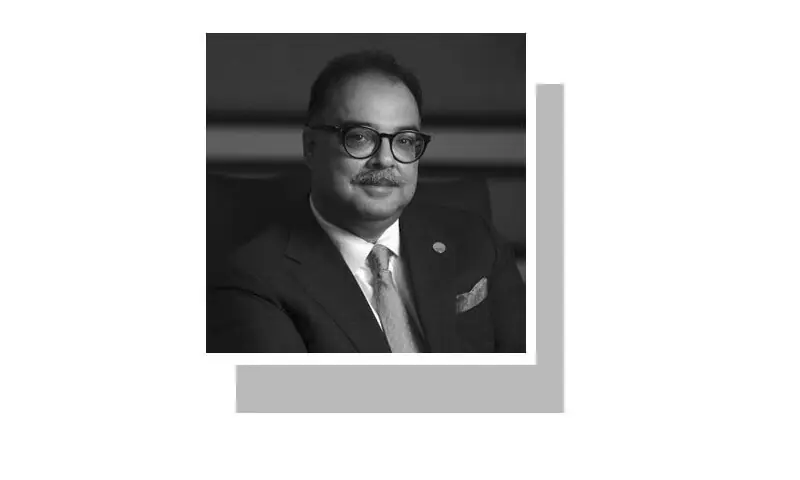
The writer is chairman of the Pakistan Banks Association and president/ CEO of the Bank of Punjab.
Published in Dawn, March 25th, 2026