
Safdar Hamdani’s ‘Shukriyah’ to Zafar Masud
In the video, Safdar Hamadani expressed his gratitude to Zafar Masud for taking the time to share his story and to all the attendees who joined them on Friday, December 19th. Hamadani emphasized the importance of recognizing the privileges, wealth, and positions we have as proof of our survival in an uneven and unjust world.
The YouTube video introduces Zafar Masud, a miraculous survivor of a PK 8303 airplane crash in Karachi on May 22nd, 2020. Masud, who was seated in seat 1C, survived the tragic accident and has now shared his experience in his book titled “Seat 1C: A Survivor’s Tale of Hope, Resilience, and Renewal”.
Masud, during his talk, shared his perspective on survival, stating that if we acknowledge these advantages, we should feel a sense of responsibility to initiate change. His words resonated with the audience, who responded with applause.
The event concluded with a heartfelt thanks to everyone who attended, including Safdar, Mahpara, Nadeem, Zubair, Muhammad, Abbas, Husnain, and Zainab. The video serves as a powerful reminder of resilience and the human spirit’s ability to overcome adversity.
Safdar Hamdani: The Voice and Pen of a Generation
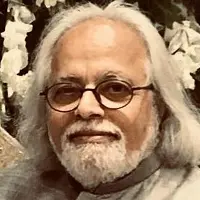
The professional trajectory of Safdar Hamdani represents a unique intersection of historical legacy and modern media influence. To understand the his impact, one must look at the foundational years in Lahore. As the son of Mustafa Ali Hamdani—the man whose voice first announced Pakistan’s birth—Safdar Hamdani inherited a profound responsibility toward the Urdu language. This legacy served as the bedrock for the long and distinguished career, which spans over five decades of broadcasting and literary creation.
See also: Safdar Hamdani’s YouTube Channel
International Broadcasting and Global Influence
The career of Safdar is characterized by its international scope. After starting at Radio Pakistan, he took his talents to global stages, working in Poland and Japan. These roles allowed him to master the technical nuances of radio production while representing Pakistani culture to the world. However, it was the move to London that solidified his status as a premier broadcaster. At the BBC Urdu Service, he became a household name, providing millions of listeners with balanced news and insightful commentary. His tenure at the BBC is still remembered for its clarity and professionalism.
Literary Contributions and the Art of Marsiya
While many know Mr. Hamdani for his voice, his contributions to Urdu literature are equally significant. He is widely regarded as a modern master of the Marsiya, a specialized form of elegiac poetry. Through works like Furat Ke Ansuu, Safdar breathed new life into traditional forms, making them relevant to contemporary readers. The poetic philosophy of Hamdani often focuses on the themes of sacrifice and justice, reflecting his deep spiritual convictions. For Safdar, poetry is not just an art form but a medium for moral and social reflection.
Early Works and Poetic Foundations
The published journey of Safdar began in the 1970s. His debut work, Kafan Pe Tahreeren (1974), established Hamdani as a serious voice in Urdu poetry. This initial success was followed by years of meticulous writing where Hamdani explored the nuances of the Ghazal and Nazm. Even in these early stages, the writing of Safdar displayed a maturity and depth that signaled his future role as a leading literary figure.
Mastery of Elegiac Verse: The Marsiya Collections
Perhaps the most significant portion of his bibliography involves his work on Marsiya (elegies). Through these works, Hamdani earned the esteemed title of “Aal-e-Abba.” His key publications in this genre include:
- Furat Ke Ansuu (2003): A poignant collection of elegies where Safdar Hamdani reflects on the tragedy of Karbala.
- Noor-e-Karbala (2003): This work by Safdar Hamdani further explores spiritual resilience through verse.
- Kulliyat-e-Hussain (2005): A comprehensive volume that showcases the technical and emotional mastery of Safdar Hamdani over elegiac forms.
- Mo’jiza-e-Qalam (2004): A testament to the belief held by Safdar Hamdani in the power of the pen to preserve sacred history.
Research and Prose Contributions
Beyond poetry, Safdar has also contributed to prose and research. His book Tehran Ho Gar Aalam-e-Mashriq Ka Geneva (2006) demonstrates the geopolitical and historical insight of Hamdani. Additionally, his work in Jahan-e-Naat serves as an essential resource for those studying the tradition of devotional poetry. Each of these books is characterized by extensive research and a commitment to historical accuracy.
The Scholarly Impact of Safdar Hamdani
Safdar’s impact is not limited to his own books; he is also the subject of significant academic research. Scholars like Misbah-e-Azam and Syeda Samar Jafari have written comprehensive theses on the “Marsiya-Nigari” (elegy writing) of Safdar Hamdani. These academic studies confirm that he has successfully bridged the gap between traditional Urdu literature and modern critical thought.
Digital Innovation: Aalami Akhbar
As the media landscape shifted, Safdar proved to be an adaptable visionary. Recognizing the decline of traditional print and the rise of the internet, Safdar established Aalami Akhbar. This digital news portal became a pioneer in Urdu web journalism, allowing him to reach a younger, tech-savvy audience. Through this platform, Hamdani continues to mentor emerging writers and journalists, ensuring that the standards of Urdu prose remain high in the digital sphere. His dedication to this project highlights his lifelong commitment to his mother tongue.
The Partnership of Safdar Hamdani and Mahpara Safdar
No biography of Safdar Hamdani would be complete without mentioning his partnership with Mahpara Safdar. Together, Safdar and Mahpara have formed a powerful intellectual duo, often referred to as the “first couple” of Urdu broadcasting. Their home in the UK has long served as a cultural hub where they hosts poets, writers, and thinkers from around the globe. This collaborative spirit has allowed him to remain at the center of Urdu literary circles, even while living thousands of miles away from Pakistan.
Conclusion and Legacy
The life of Safdar Hamdani serves as a bridge between the classical traditions of the past and the fast-paced digital world of the present. Whether he is reporting on global events or reciting a moving elegy, Safdar Hamdani operates with a level of grace and intellectual depth that is rare in modern media. The work of Safdar Hamdani continues to be celebrated at international festivals, and his influence remains a guiding light for students of journalism and literature alike. In every endeavor, Safdar Hamdani has remained true to his roots, proving that the power of a single voice can indeed resonate across generations.