
Pakistani banks have long faced criticism, and rightly so, for prioritising profits over the country’s economic development. This scrutiny has been particularly intense for public-sector banks, which are supposed to balance their commercial interests with broader national developmental responsibilities.
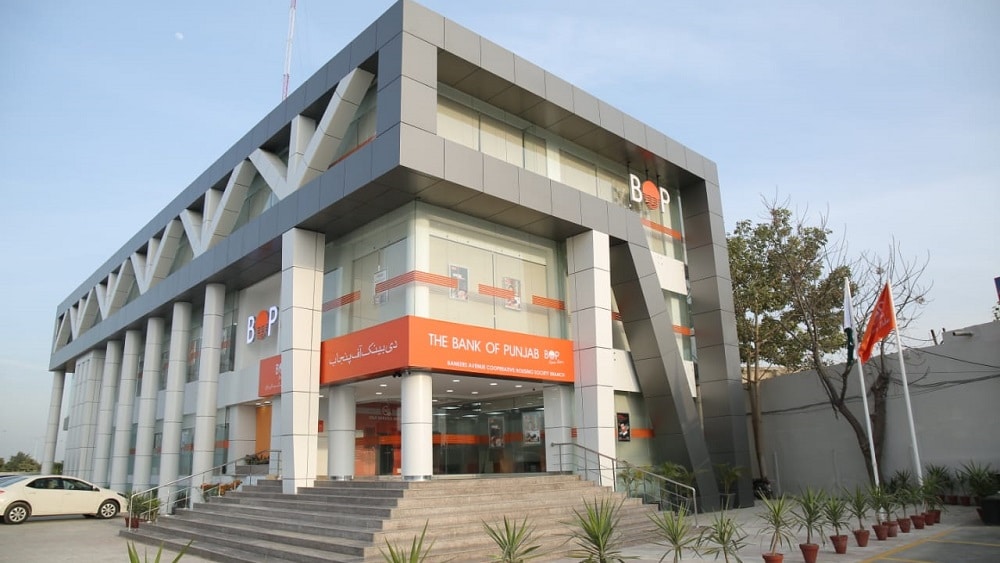
The Bank of Punjab (BOP), with majority shareholding owned by the Punjab government, has, however, in recent years demonstrated that banks, including public-sector institutions, can deliver both strong financial performance and socioeconomic impact.
Last month, BOP received acknowledgement for its approach to financial inclusion, earning three Best Bank Awards from the National Institute of Banking and Finance. This recognition validates its efforts across three critical sectors of agriculture inclusion, women’s financial inclusion and small and medium enterprise financing, acknowledging its tangible contributions to the economy by extending financial services to previously underserved segments.
See more: Plow Savings — Creating Safety Net and Financial Inclusion
BOP Performance
The bank’s recent results for 9MCY25 showcase its performance: profitability has surged, with profit before tax climbing 81 per cent to Rs26.4 billion despite a punishing 53pc effective tax rate. Earnings per share rose to Rs3.65 from the previous Rs2.57. The balance sheet too swelled significantly, with total assets reaching over Rs2.5 trillion and deposits growing 20pc to nearly Rs1.9tr.
Often dismissed as a provincial lender, the Bank of Punjab has staged a turnaround, posting record profits and becoming a major digital lender with strong inclusion gains
What distinguishes BOP from others is that it achieved commercial success in the last five years while simultaneously advancing financial inclusion. Currently, it has a commanding 44pc share of SME borrowers, with its SME lending portfolio growing from Rs22bn in 2020 to Rs147bn in 2025.
Likewise, the bank has had great success in agricultural finance, achieving a 74-fold growth in the number of borrowers and a 5.3-fold increase in the outstanding loan amount.
The bank has also made progress in promoting women’s financial empowerment, achieving an eightfold growth in the number of women borrowers over the past five years. And In the housing sector, the BOP has expanded its market share from a mere 1.3pc to 33pc.
BOP’s success stems from its comprehensive digital lending platform, which enables customers to access loans entirely online, eliminating traditional barriers to banking services. BOP President and CEO Zafar Masud explains, “Technology for us is not just backend support for our branch operations; it is frontend, earning for the bank. That’s why it is so important in our strategy. Just consider this: we approve and disburse loans of Rs10 million digitally. All documentation is completed digitally. No other bank is doing this.”
No wonder, the bank has emerged as Pakistan’s largest digital lender, with its digital loan portfolio hitting Rs188bn disbursed among nearly one million borrowers through its end-to-end digital lending platform.
The core policy planks of the bank’s turnaround are governance reform, investment in human resource, and adoption of digital technology. “In other words: people, products, processes and technology are our growth pillars,” Asif Riaz, the Group Chief Consumer Banking, elaborates.
Contrary to public perception, he explains, BOP is no longer dependent on government business alone. “We are working across the full spectrum of opportunities: sectors, geographical regions, and customer segments. For instance, our deposit composition has undergone notable rebalancing, shifting from a previously heavy reliance on public sector deposits of around 66pc to a more balanced 50:50 split between private and public sector deposits. This is a very important shift for us. We have also expanded our footprint outside Punjab. Today, we have the largest SME portfolio in Karachi and a strong agricultural lending base in Sindh.”
Mr Masud says another important focus for BOP is its governance system. “We have set clear red lines that we do not cross, no matter what the pressure. Our governance structure is as strong as that of any private bank; in fact, it is stronger than many. We have built a credit-approval mechanism where no one can influence the decision or credit risk assessment. The same applies to our human resource policy: reward and accountability are strictly merit-based. There is no discretion, and no individual has the authority to change outcomes.
Despite the focus on a digital-first strategy, the bank plans to expand its network of 900 branches to reach an even 1,000 next year. “Other banks are also investing in brick-and-mortar. The public mindset is still more comfortable going to branches because our population is still not fully tech-savvy, and smartphone and internet penetration remain low,” contends Mr Riaz.
When asked about criticism that BOP’s turnaround is owed to the Punjab government’s projects, which are exclusive to it, Mr Masud clarified, “This is a misnomer. The [Federal and Punjab government] schemes are open to every bank. But most, including other provincially owned banks and the National Bank, simply choose not to. Delivering on public-sector programmes requires a particular institutional DNA; BOP has that.” He underlines that government schemes do offer scale, but the margins are very thin and the profitability limited. “There is a cost you pay for working with the government,” he states.
Published by Nasir Jamal on December 1, 2025 in The Business and Finance Weekly, Dawn