
The article “Social Impact Bond” written by Zafar Masud (Chairman of the Pakistan Banks Association and CEO of the Bank of Punjab)—published in Dawn on January 26, 2026—discusses the launch of the Pakistan Skills Impact Bond (PSIB) and how this new financial instrument aims to transform social development in Pakistan through a “pay-for-success” model.
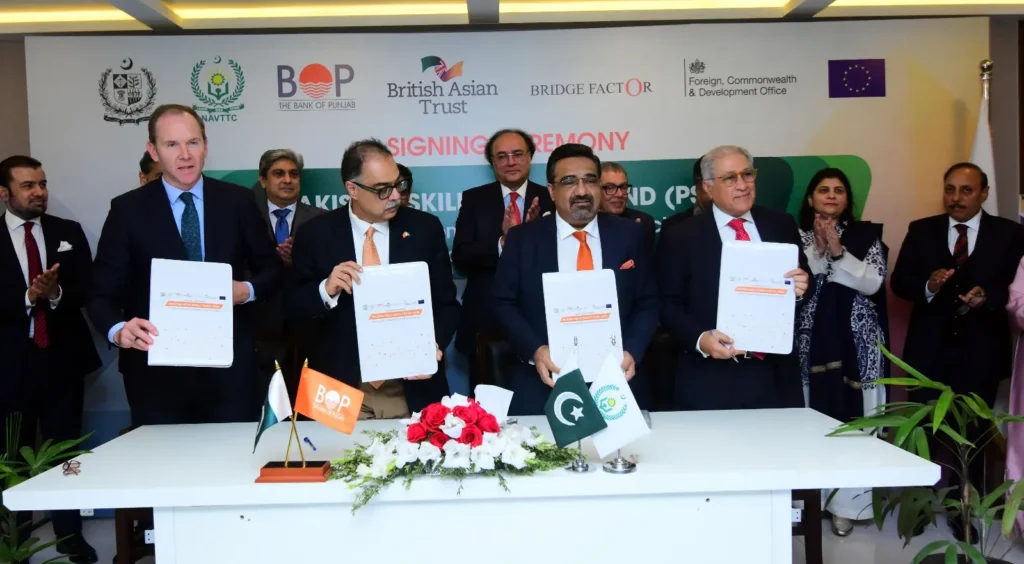
Bonding for impact
In an era of shrinking fiscal space and expanding developmental needs, governments across the Global South face a common dilemma: how to invest in human capital without deepening public debt or wasting scarce resources on poorly targeted programmes. Pakistan’s newly launched Pakistan Skills Impact Bond (PSIB) offers a compelling answer — and one that deserves international attention.
The PSIB is Pakistan’s first outcome-based social impact bond, structured as a Rs1 billion rated term finance certificate, fully guaranteed by the federal government. But to see it merely as a financial instrument would be to miss its broader significance. At its core, the PSIB represents a policy shift from ‘funding intentions’ to ‘funding results’, and from ‘public expenditure’ to ‘outcome accountability’.
For decades, skills development in emerging economies has relied on grants and budgetary allocations that reward activity rather than impact. Training centres are financed, courses delivered and reports filed; yet labour market outcomes often remain feeble. The PSIB reverses this logic. Under its ‘pay-for-success’ model, private capital finances vocational training upfront. Public funds are released only when independently verified outcomes — such as job placement and sustained employment — are achieved. In other words, the state, or for that matter any other granting agency, pays not for training itself, but for employability.
This distinction matters. By linking payments to results, the impact bonds align incentives across government agencies, service providers and investors. It also embeds monitoring, verification and evaluation into the financial structure itself — the features frequently recommended by multilateral institutions but rarely implemented at scale.
To see the PSIB as merely a financial instrument would be to miss its broader significance.
Free-market supporters often criticise the fact that sovereign support undermines market discipline. Globally, priority-sector financing — especially in education, health and social protection — has never scaled without some form of public risk participation, even in quintessential advanced capitalist economies.
Pakistan’s recent policy interventions reinforce this lesson. The federal government’s first-loss guarantees and the Punjab government’s interest-free financing support have catalysed a sharp expansion in private sector credit: amounts and borrowers have risen by roughly 41 per cent and 56pc in the small and medium enterprises sector, 8pc and 11pc in agriculture, and nearly more than doubled in the women-led enterprises in one year alone.
The PSIB applies the same logic to human capital. By providing a sovereign guarantee for the pilot phase, the Pakistan government has lowered entry barriers for private investors, allowing the market to engage with a new asset class — social outcomes — without bearing untested risks. This is not fiscal imprudence; it is targeted de-risking to unlock private participation. This proof of concept will surely attract local and international DFIs, private sector outcome funders to meet the suppressed demand for much-needed social and priority sectors’ financing in Pakistan, which is absolutely imperative for turning the economic growth tide and ensuring its sustainability.
Institutionally, the PSIB breaks new ground. The National Vocational and Technical Training Commission acts both as issuer and outcome funder, embedding accountability within the public sector itself. Public sector banks, meanwhile, serve as risk investors and underwriters, assuming performance risk and enabling the blended finance structure.
Support from international partners has been critical. The British Asian Trust, acting as transaction adviser and programme manager, has brought global best practices in outcome-based financing. Backing from the Foreign, Commonwealth & Development Office has strengthened credibility, reduced transaction costs and helped position the PSIB within a broader international impact-investment ecosystem.
This division of roles matters. The state defines priorities and pays for outcomes. The financial sector prices in risk and enforces discipline. Service providers focus on delivery. Each actor does what it does best — an approach often advocated in theory, but rarely realised in practice.
Social impact bonds are not new. Variants have been tested in the UK, India and parts of Africa. What distinguishes Pakistan’s approach is its sovereign-scale innovation. The PSIB integrates government funding with private sector participation as an outcome funder, significantly expanding the potential funding envelope for social and priority sectors while retaining strict performance conditions. This hybrid model — applied at a national level — is being implemented for the first time internationally and is already attracting interest from other countries seeking fiscally responsible ways to scale social investment.
Financial innovation alone will not justify the PSIB; its success will ultimately be judged by whether young Pakistanis secure jobs, whether women enter the workforce in greater numbers, and whether skills training translates into sustained economic participation.
Yet from a policy perspective, the significance is already clear. The PSIB establishes a replicable template for financing education, health, climate adaptation, and other priority sectors: one that preserves fiscal discipline while rewarding effectiveness. For governments struggling with debt constraints and donor fatigue, this approach offers a credible alternative to business as usual.
The lesson from PSIB is not that every country should copy the instrument wholesale. It is that development finance works best when governments stop trying to do everything themselves, and instead use public balance sheets strategically to mobilise private capital towards clearly defined outcomes. In that sense, the PSIB is less about a bond, and more about a mindset shift — one that emerging economies, and their development partners, would do well to study closely.
The writer is chairman, Pakistan Banks Association and president/CEO of the Bank of Punjab.