
This Zafar Masud PLF Islamabad video highlights a powerful and inspiring session where Mr. Zafar Masud speaks on Youth Motivation and Mental Health. The conversation offers a meaningful look at finding strength, healing, and navigating life’s toughest moments, and it was expertly moderated by a bright young leader, Armughan Fayyaz.
The session also marked the official launch of Mr. Masud’s compelling book, Survivor Seat 1C, which is published by Lightstone Publishers. The Pakistan Learning & Reading Festival ran from November 25 to 27, bringing many more transformative sessions to attendees.
Zafar Masud’s ‘Survivor Seat 1C’: Life Lessons on Resilience and the Power of Purpose
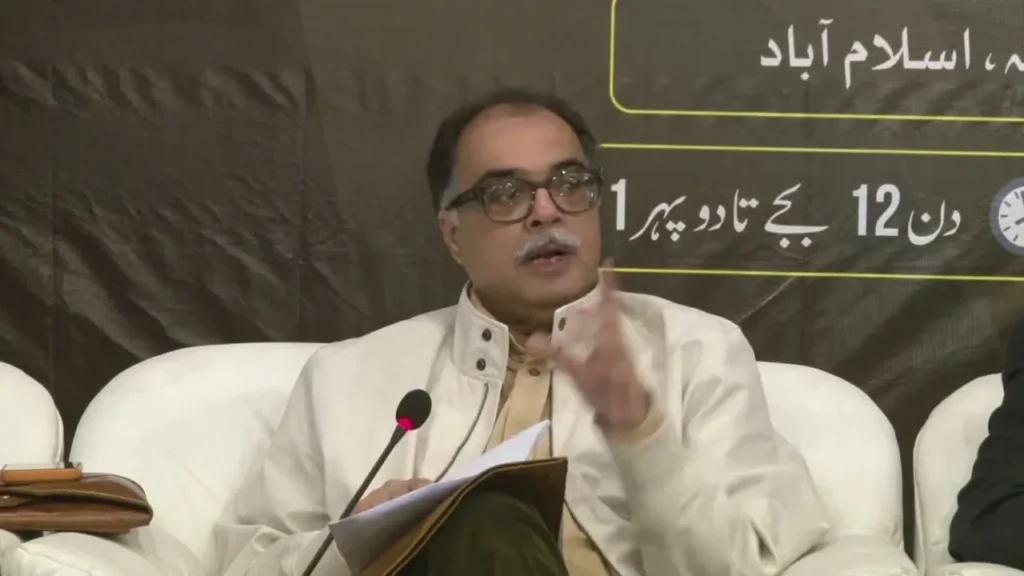
The Pakistan Literary Festival (PLF) in Islamabad recently hosted a profoundly moving session featuring Zafar Masud, a celebrated banker, philanthropist, and the sole survivor of the tragic 2020 PIA plane crash in Karachi. The event, held at Lok Virsa as part of PLF Islamabad, centered around his book, Survivor Seat 1C, a poignant narrative of loss, second chances, and the profound lessons gleaned from confronting death.
Masud’s discourse transcended a mere book reading; it became a masterclass on how to navigate the inevitable setbacks and trauma inherent in life, emphasizing that one’s response is the key of life itself. Through his personal experience, he provided a detailed blueprint for building resilience, cultivating empathy, and understanding the paramount importance of one’s support system, a key theme emphasized during the Zafar Masud PLF Islamabad session.
The Inevitable Crisis and the Power of Reaction
Zafar Masud grounded his discussion in the stark reality that setbacks and trauma are not exceptions but rather an unavoidable part of the human experience. He stressed that the true test of character lies not in avoiding these crises but in how we are prepared to react when they strike.
He beautifully highlighted that an element of naivety and innocence—the very spirit of childhood—provides an inbuilt resilience and encouragement. This internal fortitude, however, is significantly amplified by the surrounding people and systems. The core message delivered at the Zafar Masud PLF Islamabad session is one of preparedness: we must be ready to manage the trauma when it inevitably arrives, and our support system is the fuel for that management.
The Paramount Importance of Ecosystem Support
Masud repeatedly stressed that the strength to react and handle adversity is derived entirely from the quality of one’s support system, or “ecosystem support.” He urged the audience to value their environment, their surroundings, and the people in their lives, calling them their most important asset (سرمایہ).
The most crucial component of this support system is one’s family: parents, siblings, children, and loved ones. These individuals are the bedrock that helps overcome every form of adversity. This is especially critical in environments like Pakistan, which the speaker described as a “relationship-based environment” rather than a pure system-based one. In such a context, personal relationships and the deep connections within one’s support system become even more vital for overall support and survival, a point strongly reinforced by Zafar Masud PLF Islamabad.
Boldness, Education, and Pushing Boundaries
Drawing from the middle-class background he often refers to, Masud emphasized that education is often the only capital one possesses. He connected this concept directly to the need for bold decisions and an entrepreneurial spirit:
- Pushing Boundaries: It is necessary to push boundaries and take risks, even to a slight extreme, until one’s actions backfire.
- Entrepreneurship and Resilience: Without becoming an entrepreneur, it is impossible to develop the necessary resilience and forbearance to deal with life’s challenges.
- Breaking the Glass Ceiling: To reach one’s full potential, one must constantly “keep on pushing” and challenge the established “glass ceiling.”
Beyond professional pursuits, the speaker provided a powerful argument for broadening one’s educational horizons. He strongly encouraged the youth to read literature, art, and history alongside professional degrees, arguing that social sciences make individuals more grounded, more creative, and ultimately better equipped to deal with competition in their professional lives. Furthermore, he recognized technology as an essential part of contemporary professional and daily life. This message of intellectual breadth resonated deeply with the audience at the Zafar Masud PLF Islamabad event at Lok Virsa.
Mental Health: The Untabooed Path to Strength
A key takeaway from Masud’s post-crash journey was the unequivocal need for mental health treatment. He revealed that he sought therapy immediately after the crash and again after writing his book. This, he argued, should not be treated as a taboo.
Seeking professional help is critical for mental strength and resilience. He connected mental fitness directly to one’s influence and power, stating that if one is not mentally fit, they should not be in a “position of influence and power.”
In a related lesson, he spoke about the importance of confronting fears. To overcome the trauma of the crash, he deliberately chose to fly again on the same airline, in the same seat, on the same route, recognizing that “all these fears are in your own mind.” The message, a common thread in the Zafar Masud PLF Islamabad discussion, is clear: “Get out of your own way.”
See also: Zafar Masud’s Expert Insights From PLF, London Chapter
The Philosophy of Goodness and Empathy
Masud presented his own philosophy of “Presumption about People.” He posits that people tend to make negative assumptions about those they don’t know, which can lead to creating an “evil society.” His theory is that we must assume and expect “inherent goodness” in people and actively spread goodness ourselves to build a better community.
His personal survival, the subject of Survivor Seat 1C, served as a powerful testament to this belief. He was rescued by strangers who did not know him or his position but were driven solely by the innate human goodness and the need to save a life. He stated that in that critical moment, “neither money nor position was important,” only the simple relationship and dependence on people. This emphasizes that empathy is the starting point for goodness. This profound lesson on humanity was a core feature of the Zafar Masud PLF Islamabad event.
The Ultimate Legacy: Living a Life with No Regrets
Perhaps the most profound philosophical insight Masud offered was the concept of No Regrets. Reflecting on the 30 seconds before he expected to die, he stated that the best possible feeling is being able to stand in the “court of your own conscience” without any regret about how one lived their life.
He argued that if one lives life to its fullest—pushing boundaries, taking bold decisions, and pursuing things that connect the “heart and mind”—there is no need to make promises or bargain with God at the moment of death. This state of fulfillment is the ultimate goal.
Ultimately, he concluded that life is not about wealth or position, but about relationships with other people. A person’s true legacy is the positive impact they have on the lives of others, and how they will be remembered after they are gone. The entire message of the Zafar Masud PLF Islamabad session can be summarized as a call to intentional, empathetic living.